← All EV tools

Does buying an EV make sense for me?

Compare electricity with petrol, diesel or LPG. See the cost, the charging time and the benefits in Bulgaria.

Owner sample: 17.7 kWh/100 km

Official and owner consumption

Model Y

2020–2024 · Long Range / Performance

Tesla · WLTP average
16.4 kWh/100 km
Includes charging losses
Owner sample
17.7 kWh/100 km
5 owner reports

Model presets use the owner average for driving. The calculator adds charging losses separately; WLTP is a reference only.

A small sample from public owner communities, not a fleet average. Versions, wheels, climate and driving differ. S and X examples cover the newer Dual Motor cars, not older 75D/100D versions.

Reported range: 14.9–19.6 kWh/100 km.

Figures and sources

Equal weight per report; at least 1,600 km per owner. Wh/km ÷ 10; Wh/mi ÷ 16.09344. Single trips and repeated reports are excluded. Parked use, such as Sentry Mode, is extra.

Tesla · WLTP average

Equal weight per listed version; not weighted by sales. Official versions and owner versions may differ.

  • RWD: 15.7 kWh/100 km
  • Long Range RWD: 15.5 kWh/100 km
  • Long Range AWD: 16.9 kWh/100 km
  • Performance: 17.3 kWh/100 km
Tesla · WLTP ↗

Owner sample

Checked on 2026-10-12

Example electricity prices

Electricity in Bulgaria

Checked on 2026-10-09 · VAT included

The AC average is for a paid regular stop; the DC average is for extra fast-charging stops. €/kWh is the price per unit of energy, like €/litre at a petrol station.

Home electricity providers

Household prices include 20% VAT and network fees, rounded to four decimals. Choose the provider shown on your electricity bill.

Checked on 2026-10-10 · 2026-07-01–2027-06-30

ProviderNight tariffDay tariff
EVN ↗0.0923 €/kWh0.1546 €/kWh
Electrohold ↗0.0919 €/kWh0.1542 €/kWh
ENERGO-PRO ↗0.0928 €/kWh0.1551 €/kWh
Standard rates without subscriptions · EUR/kWh
NetworkACDC
Eldrive ↗0.410.46
Electrip ↗0.330.38–0.4

Equal weight for Eldrive and Electrip; Electrip’s DC range uses its midpoint. This is a two-network sample, not a national or usage-weighted average.

Energy only. Parking, subscriptions and time fees are excluded. Eldrive AC adds €0.03/min after four hours; partner locations can have different rates.

EVN · Night tariff
0.0923 €/kWh
AC
0.37 €/kWh
DC
0.425 €/kWh

Your driving

km per day

Where can you charge?

AC while parked, DC for a faster stop

AC fits a night at home or hours at work or the shops. DC is a faster public stop, useful on a longer trip or when you cannot plug in regularly.

The AC average is for a paid regular stop; the DC average is for extra fast-charging stops. €/kWh is the price per unit of energy, like €/litre at a petrol station.

Home charging

3.7 kW · 1 × 16 A

kW is how fast you fill it

More power adds driving distance faster. Think of a tap: kW is the flow, kWh is the amount collected.

Ordinary socket 2.3 kW≈ 10 km per hour
Limited home charging 3.7 kW≈ 17 km per hour
Faster home charging 7.4 kW≈ 33 km per hour
Three-phase charging 11 kW≈ 50 km per hour

Illustration at 20 kWh/100 km and 10% charging losses, with room in the battery. Your car and available supply can limit the speed.

Your home shares its power

If a supply has 7 kW available and the house is using 2 kW, only 5 kW remains for the car at that moment. The boiler, oven and heating can all reduce the spare capacity.

Parked at home

Plugged in from 22:00 to 08:00 means 10 hours available to charge.
hours per night

How would you split your charging?

Share of the energy you need, including longer trips. If AC cannot cover your choice, DC fills the gap.

How to read this verdict

Plugged in does not mean time lost

Ten hours connected while you sleep is not ten hours of waiting. Extra time counts detours, queues and the part of a charging stop outside your usual activities.

How to read this verdict

A rule of thumb for charging convenience: easy means up to one DC stop a week and two extra hours a month. Over two stops a week or four hours a month is demanding; between those needs planning.

The answer combines electricity-versus-fuel savings with charging convenience. It does not decide whether the purchase pays back: price, finance, repairs and resale value still matter.

An average month is 30.44 days. Longer trips add to distance, energy and cost; this is not a route plan and does not predict stops on a particular trip.

The split is energy reaching the battery. AC charging losses are included in the cost; DC battery energy approximates billed energy. Parking and time fees are extra.

Calculation and sources

Connected time includes charging while you sleep or work. Extra time includes detours, queues and time you would not otherwise spend there.

Without a reviewed fast-charging curve, charging time uses your assumed average speed.

Evaluated on 2026-11-03 · dataset 2026.10.r00

Estimate
For your everyday driving

How robust is this result?

€93.19 of additional cost for the cheaper car would equalise the totals over the displayed period.

Here we compare electricity with the cheapest fuel option entered. The table shows petrol, diesel and LPG separately.

What to check

  • Your tariff, AC/DC mix and actual consumption. Purchase, repairs and resale are outside this energy comparison.

Data and assumptions

Home tariffs are supplier-specific. Public rates sample two networks; time and parking fees are excluded. Consumption and charging time remain estimates for the selected conditions.

Yes — cheaper to drive

€43.88 / month for electricity€526.60 / year
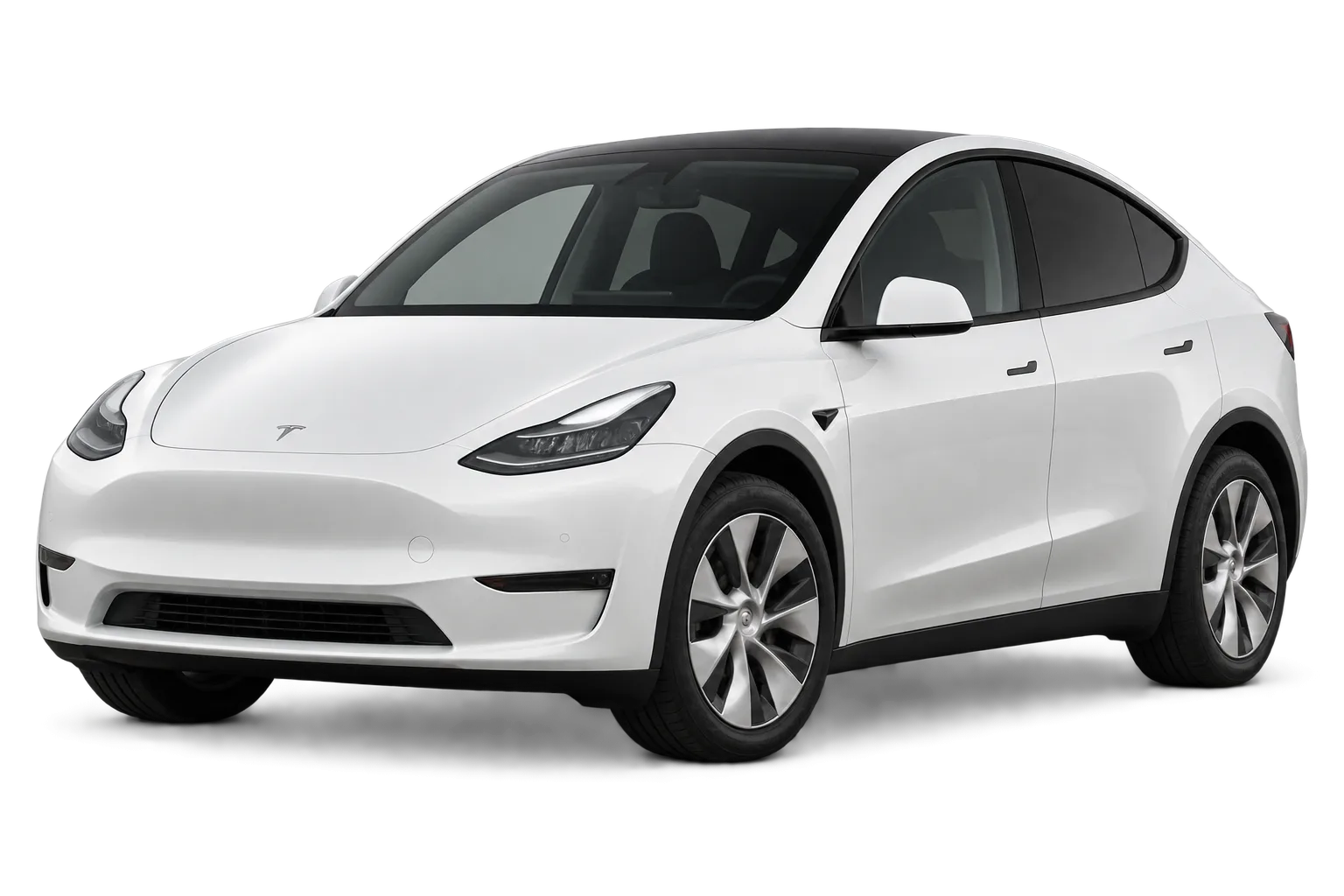
Tesla Model Y

No extra DC stops needed.

Electricity vs fuel, before purchase and ownership costs.
Same distance, different fuel

Fuel comparison

The same kilometres, including longer trips, for every car. Electricity uses your actual AC/DC split and charging losses.

7 L petrol, 6 L diesel and 9 L LPG per 100 km are editable examples, not measured national averages. Enter your own mixed-driving consumption for a closer comparison.

Fuel price defaults: 2026-10-21. Change them to your own prices. All inputs are in EUR.

Fuel price source · Fuelo · 2026-10-21

LPG starts with gas only. Add the petrol your car also uses for starts or while driving, if needed.

Savings compare electricity and fuel only. Purchase price, finance, insurance, repairs, depreciation, tax and parking are not included. The yearly estimate keeps the same driving and prices for 12 months.

2,418 km per month
CarPer monthWith the EV
Electricity17.7 kWh/100 km€43.88—
Petrol7 L/100 km€279.22€235.34less per month
Diesel6 L/100 km€277.05€233.16less per month
LPG9 L/100 km€137.07€93.19less per month
  • No annual vehicle tax

    No annual vehicle tax

    Fully electric cars are exempt from Bulgarian annual vehicle tax under Article 58(2) of the Local Taxes and Fees Act. This exemption does not cover petrol/diesel hybrids.

    Your saving equals the tax you would otherwise pay. It is not included in the fuel savings above.

    Ministry of Finance
  • Local parking benefits

    Local parking benefits

    Some municipalities offer free zone parking for fully electric cars. Registration, a sticker, time limits and local rules may apply; private car parks set their own prices.

    Check your municipality before counting a saving. Parking is not included in this calculation.

  • No engine oil changes

    No engine oil changes

    Tesla does not need engine oil changes or spark plugs. Tyres, suspension, cabin filters, brakes and repairs still cost money; maintenance is not free.

    Tesla maintenance guidance
See the breakdown
Your total monthly driving2,418 km

1,218 km usual driving + 1,200 km longer trips

Monthly charging cost€43.88€1.82 / 100 km
Energy for your driving427.9 kWh
DC stops per month0
Extra time per month0 min
Your calculated monthly mix
AC 100%427.9 kWhDC 0%0 kWh
Petrol
169.2 L / month · €3,350.65 / year
Diesel
145.1 L / month · €3,324.55 / year
LPG
217.6 L / month · €1,644.87 / year
Battery at departure
90%
Time connected
29 h 43 min per week
At home
428 kWh · €43.88
At work or another regular stop
0 kWh · €0.00
Public fast charging
0 kWh · €0.00
Add purchase, finance and 5–10 years
Share your calculation

Talk the numbers over with a friend.

Was this calculation helpful?

How usage is counted

Each visitor counts once per calculator after a completed calculation. Repeat calculations refresh the last-used time, at most once a minute. Page views and bots do not count.
Longer trips 300 km × 4 per month

Occasional long trip

Distance added to your usual daily driving.
km
per month

Yearly distance · Optional

Only a cross-check. The calculation uses daily driving and longer trips. Leave this blank if you do not know your yearly distance.
km
Electricity prices One-click tariffs

Home price

The night rate applies only during your supplier’s night hours. Use a blended price if charging continues into the day.

Home electricity providers

Household prices include 20% VAT and network fees, rounded to four decimals. Choose the provider shown on your electricity bill.

Checked on 2026-10-10 · 2026-07-01–2027-06-30

ProviderNight tariffDay tariff
EVN ↗0.0923 €/kWh0.1546 €/kWh
Electrohold ↗0.0919 €/kWh0.1542 €/kWh
ENERGO-PRO ↗0.0928 €/kWh0.1551 €/kWh
EUR per kWh
EVN
Electrohold
ENERGO-PRO

AC at work or a regular stop

Used for charging at work or another regular stop. Choose free only when someone else pays.
EUR per kWh

Public DC price

Used for extra fast-charging stops. Prices do not change your charging speed or where you charge.
EUR per kWh
Power left for the car and charging days After the home appliances

At home

Example: the home has 7 kW in total

Your home shares its power

The car shares this with the boiler, oven and heating. Try what remains for charging:

These examples use a single-phase 32 A charging circuit. They are scenarios to compare; enter the confirmed limits for your installation below.

Power left for the car

Enter the power left after other appliances, not the total power for the home. The current and phase limits below also apply.
kW

Nights you actually plug in

Count nights connected to a charger, not every night the car is parked.
per week
Installation details: amps, phases and voltage

These describe the charging circuit. For example, 16 A on one 230 V phase is about 3.7 kW; 16 A on three phases is about 11 kW. Use the values confirmed by your installer.

A per phase
V
Fuel assumptions

Petrol

L/100 km
EUR per litre

Diesel

L/100 km
EUR per litre

LPG

L/100 km
EUR per litre

Petrol used alongside LPG

Leave blank if you want to compare gas only.
L/100 km
Range between charges About 297 km
Choose a version

EU examples · battery + consumption

Battery sizes are EV Database estimates for the listed versions. Consumption comes from owner reports for this model generation and may include other trims. Both values stay editable.

RWD · CATL 6L · 11/2022–01/2025 · 57 kWh · Battery estimate · EV Database ↗ · 2026-10-09Long Range AWD · 02/2022–02/2025 · 75 kWh · Battery estimate · EV Database ↗ · 2026-10-09
Between charges, with a reserveAbout 297 km

An estimate for your settings. Speed and cold weather change the range.

How that becomes driving distance

Think of the battery as a fuel tank. Consumption is how much energy the car uses to travel 100 km. We leave a reserve instead of counting on driving to empty.

≈ 297 kmFrom 90% to 20%

At 17.7 kWh/100 km, your 75 kWh battery represents about 424 km from full to empty. The reserve reduces the distance you plan to use.

A worked example, not a promised range. Speed, temperature and battery condition change the distance.
Manual settings, if you need them

Usable battery capacity

The size of your energy tank: 60 kWh holds twice as much energy as 30 kWh.
kWh

Driving consumption

Like litres per 100 km: at 20 kWh/100 km, a 50 km drive uses 10 kWh. Try these consumption scenarios or use your car’s reading.
kWh/100 km

Charge up to

The battery level you aim to reach while parked. 80% leaves the top fifth of the battery unused.
%

Keep as a reserve

Your buffer before the next charge. A 20% reserve in a 60 kWh battery is 12 kWh kept for later.
%

Battery now

The percentage on the car’s screen. Leave it blank if you do not know it.
%

Energy reaching the battery

At 90%, adding 10 kWh to the battery uses about 11.1 kWh from the socket. This accounts for AC charging losses.
%
Compare charging routines Public only, shorter parking, winter
  • Your setup0 stops per month · €43.88
  • Public charging only12 stops per month · €182
  • Half the parked time0 stops per month · €44

Winter consumption compared with mild weather

100% means the same consumption; 125% means 25% more.
%
Advanced settings
%
kW

— Project partners —